I'm still here - and growing shiso!
Been neglecting this site for a while, but I am back to share some of our current shenanigans.
The Functional Power of Green Shiso
If you’re looking for easy ways to sneak more functional, nutrient-dense plants into your daily routine, you need to be looking at green shiso (Perilla frutescens). Before we get into how easy it is to grow and preserve, let’s talk about why it deserves a spot in your nutrition plan. From a fitness and recovery perspective, this simple green herb is a powerhouse. According to USDA data and nutrition studies, shiso leaves are an excellent, low-calorie source of calcium, iron, Vitamin A, and Vitamin C.Even better, research shows that green perilla is highly rich in polyphenols and antioxidants, specifically rosmarinic acid. These compounds exhibit potent anti-inflammatory effects, making shiso a fantastic tool for managing systemic inflammation and aiding recovery. It is top-tier functional fuel.
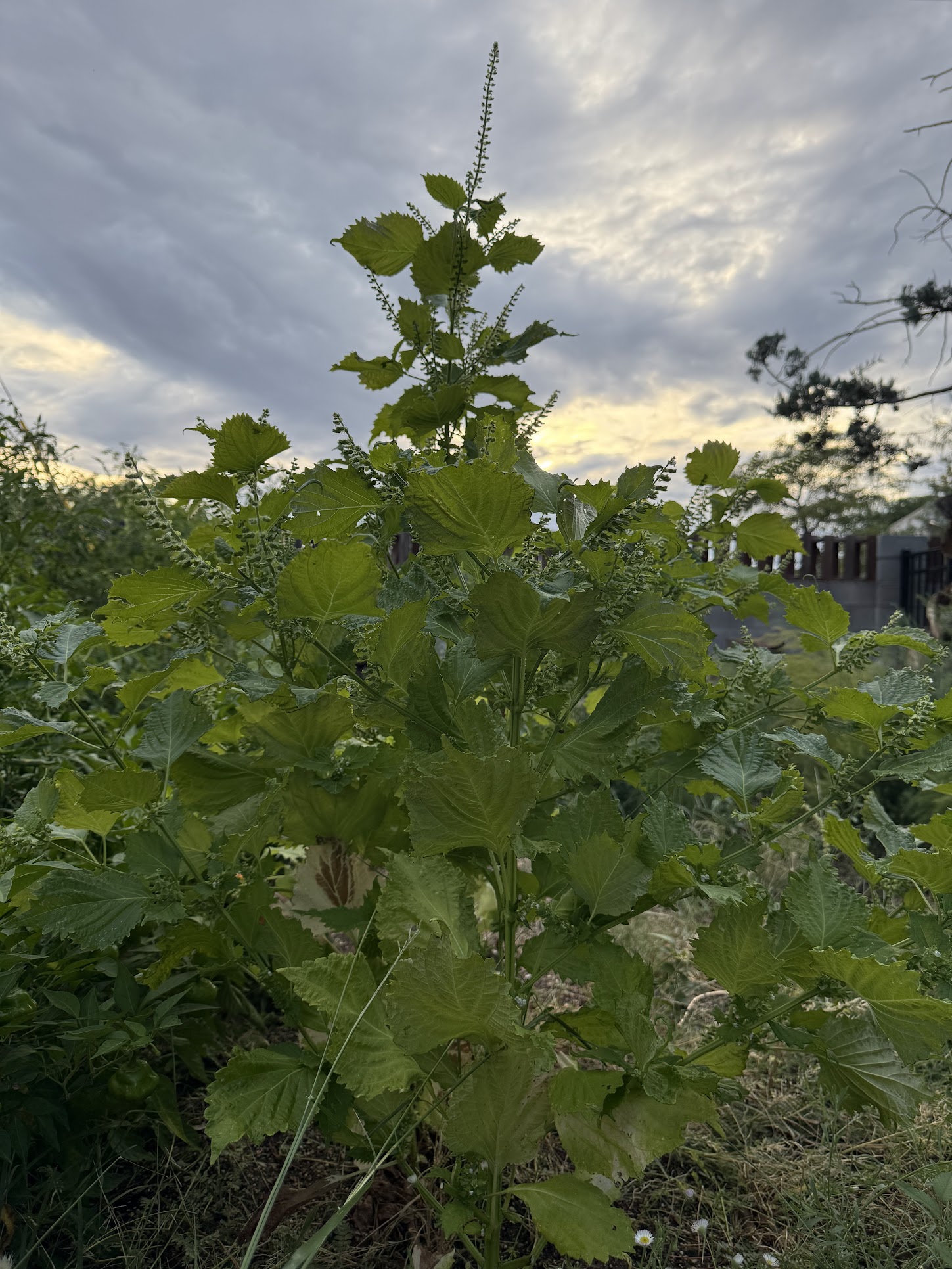
The best part about shiso is that it is incredibly easy to grow. In fact, it might be a little too easy. It requires very little maintenance and practically explodes with growth. It makes a nice different salad green that just keeps on producing as the season goes on. There is only one golden rule: you have to harvest it before the plant fully goes to seed. Once it shifts its energy into flowering, the flavor of the leaves becomes harsh and bitter, and the texture gets tough. Plus, if you let those tiny seed pods drop, you will have a thousand tiny shiso plants aggressively choking out the rest of your garden next spring.
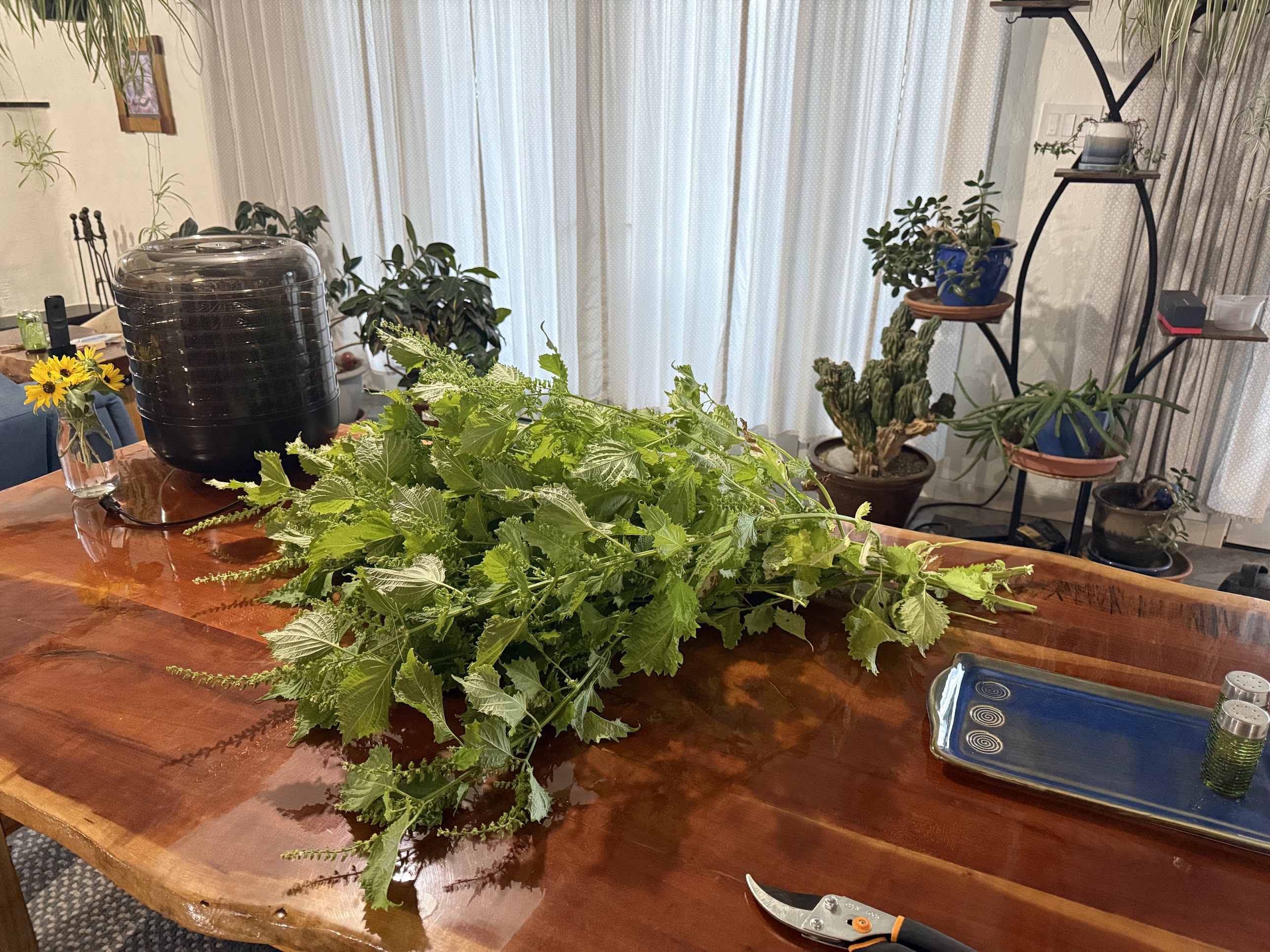
When my bush started aggressively pushing up seed spikes, I knew it was time. I simply cut the entire plant down at the base and brought it inside. Processing the plant is super simple, mindless work. You just need to strip the useful leaves from the tough stems and seed spikes.
Learn from my mistakes: Use clippers or scissors for this! Do not use your fingernails to pinch off the leaves. The plant's juices will stain the tips of your nails a brownish-green color that takes days to fade, and it just looks bad. Save your manicure and grab some garden shears.
When my bush started aggressively pushing up seed spikes, I knew it was time. I simply cut the entire plant down at the base and brought it inside. Processing the plant is super simple, mindless work. You just need to strip the useful leaves from the tough stems and seed spikes.
Learn from my mistakes: Use clippers or scissors for this! Do not use your fingernails to pinch off the leaves. The plant's juices will stain the tips of your nails a brownish-green color that takes days to fade, and it just looks bad. Save your manicure and grab some garden shears.
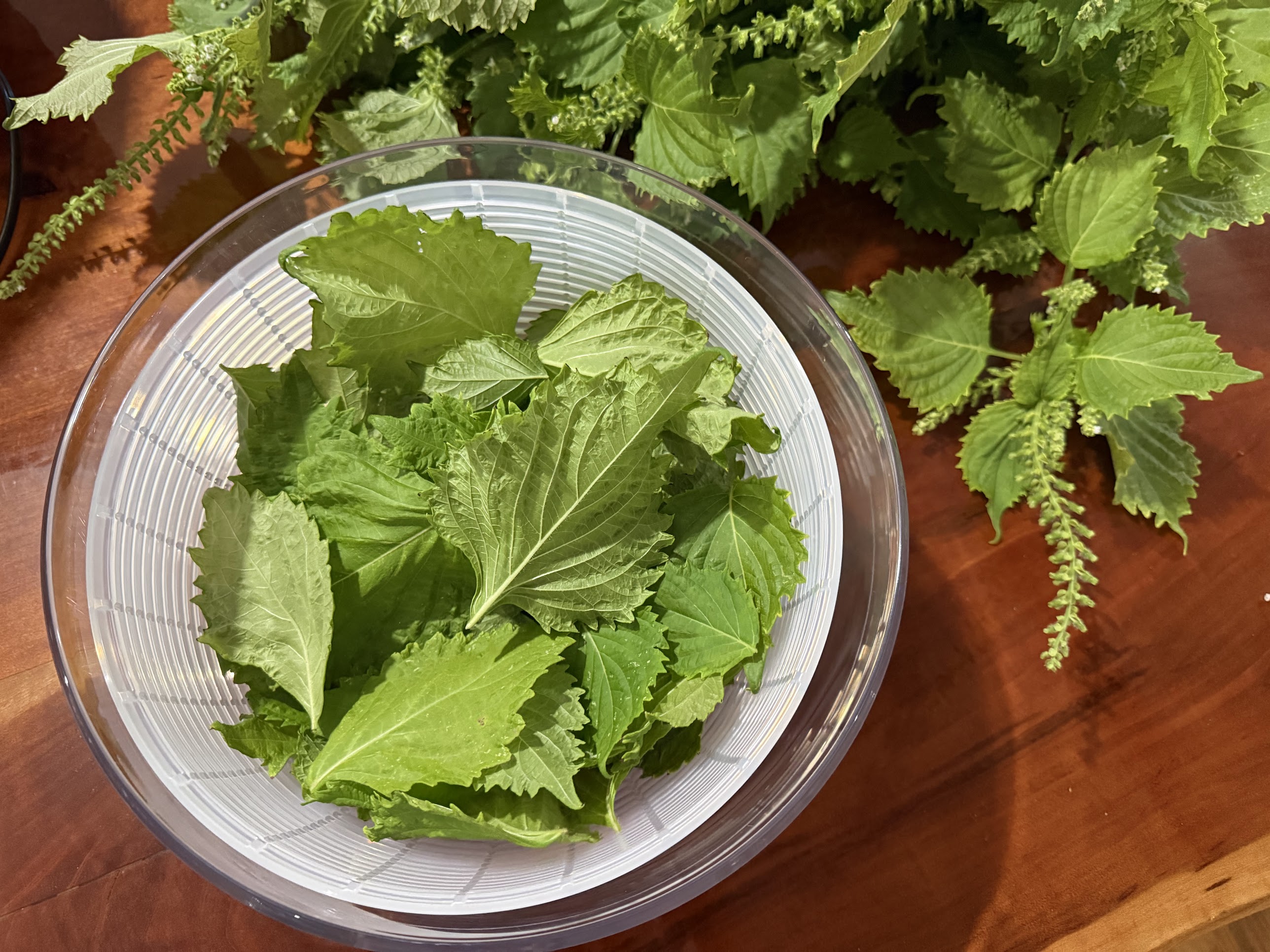
I didn't want a single leaf to go to waste. I decided to dry the entire batch to make homemade furikake for the winter. To get it all done, I split the leaves between two super easy methods: the dehydrator and the oven.
Method 1: My Ancient Dehydrator
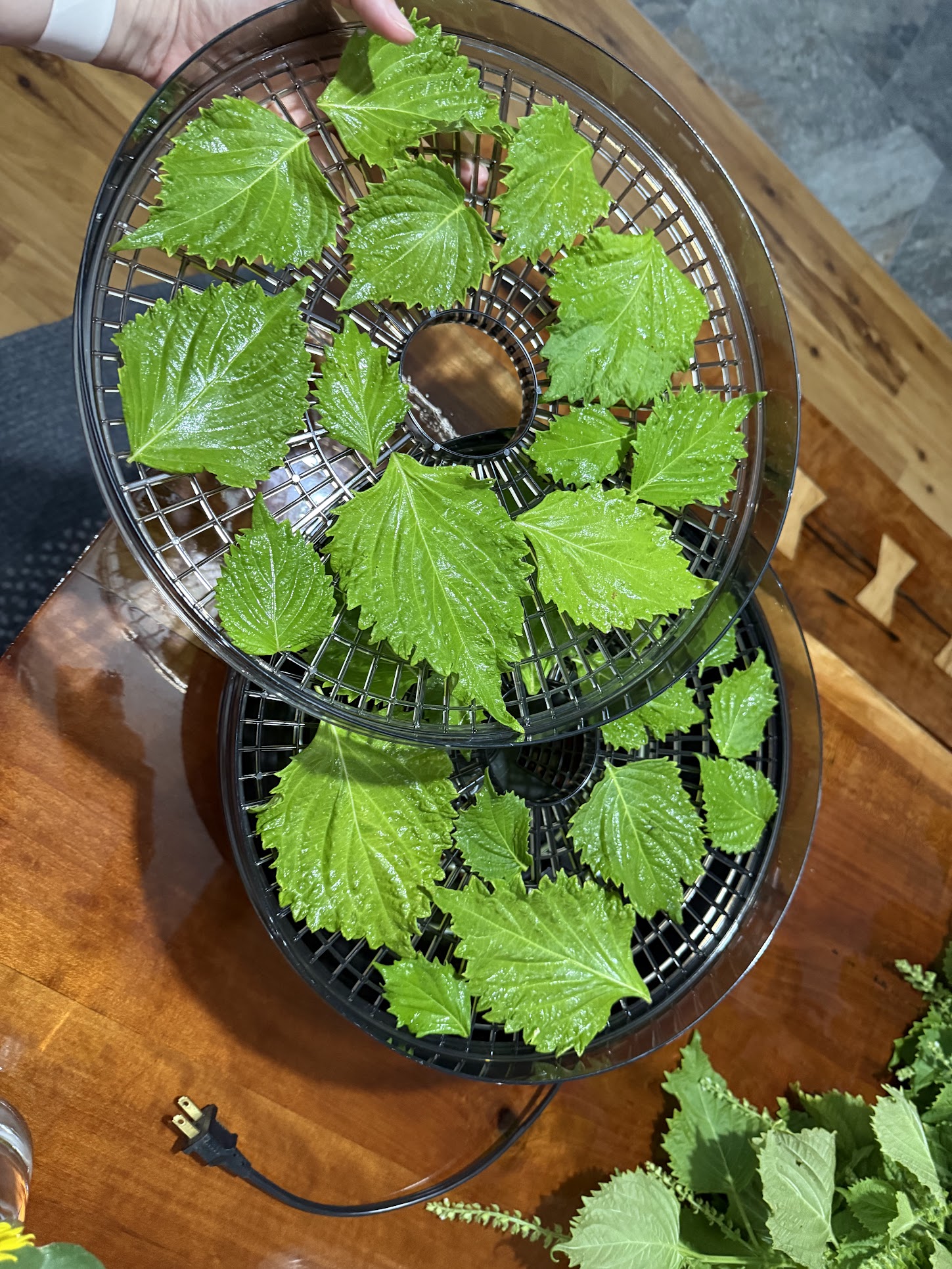
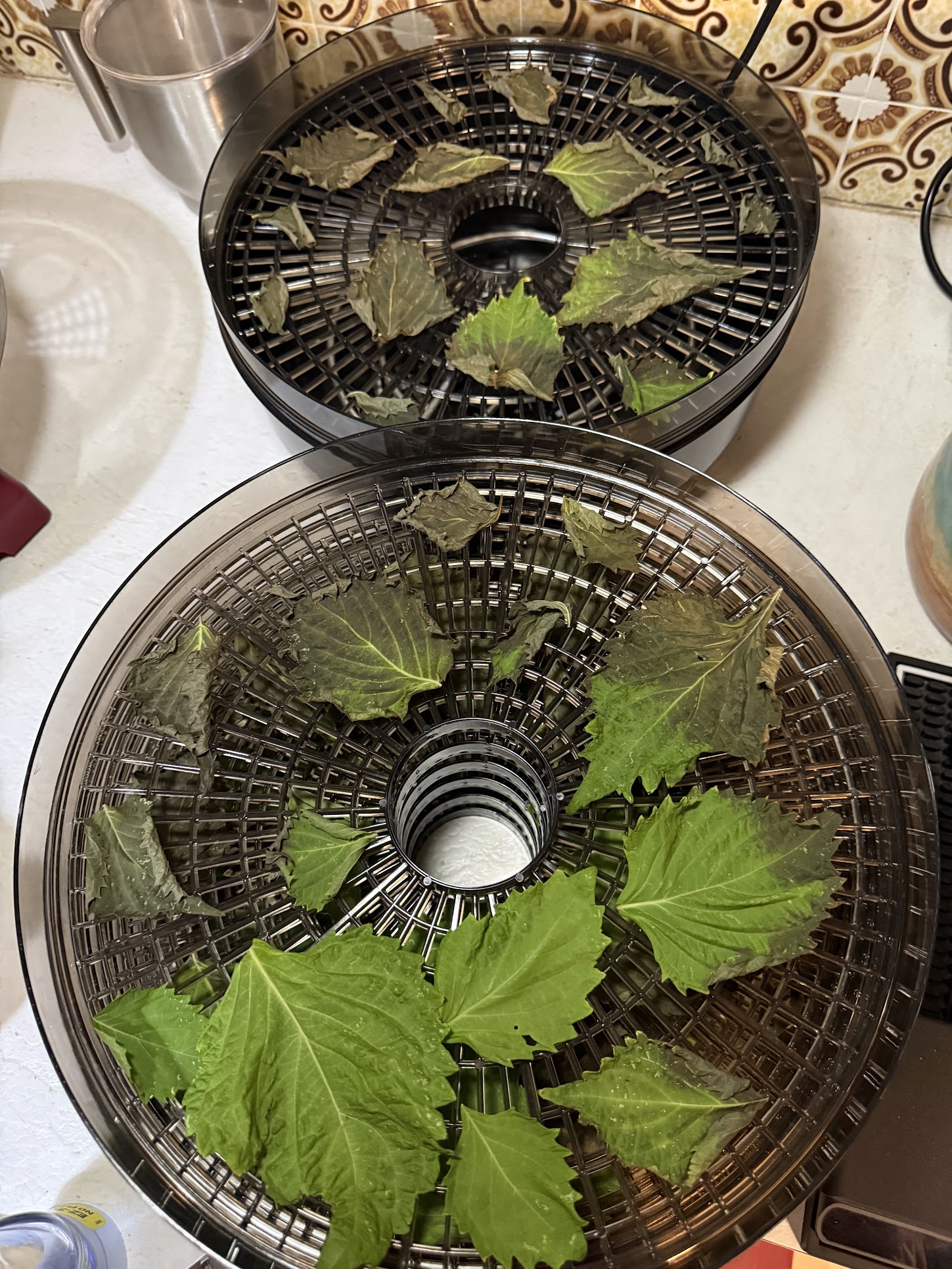
This is a gentle, foolproof method. I loaded up the trays of my old tower dehydrator with a single layer of leaves on each level. Because it’s a tall tower, I just had to periodically rotate the levels around to ensure even airflow. It's an easy approach that perfectly preserves those antioxidant compounds.
This is a gentle, foolproof method. I loaded up the trays of my old tower dehydrator with a single layer of leaves on each level. Because it’s a tall tower, I just had to periodically rotate the levels around to ensure even airflow. It's an easy approach that perfectly preserves those antioxidant compounds.
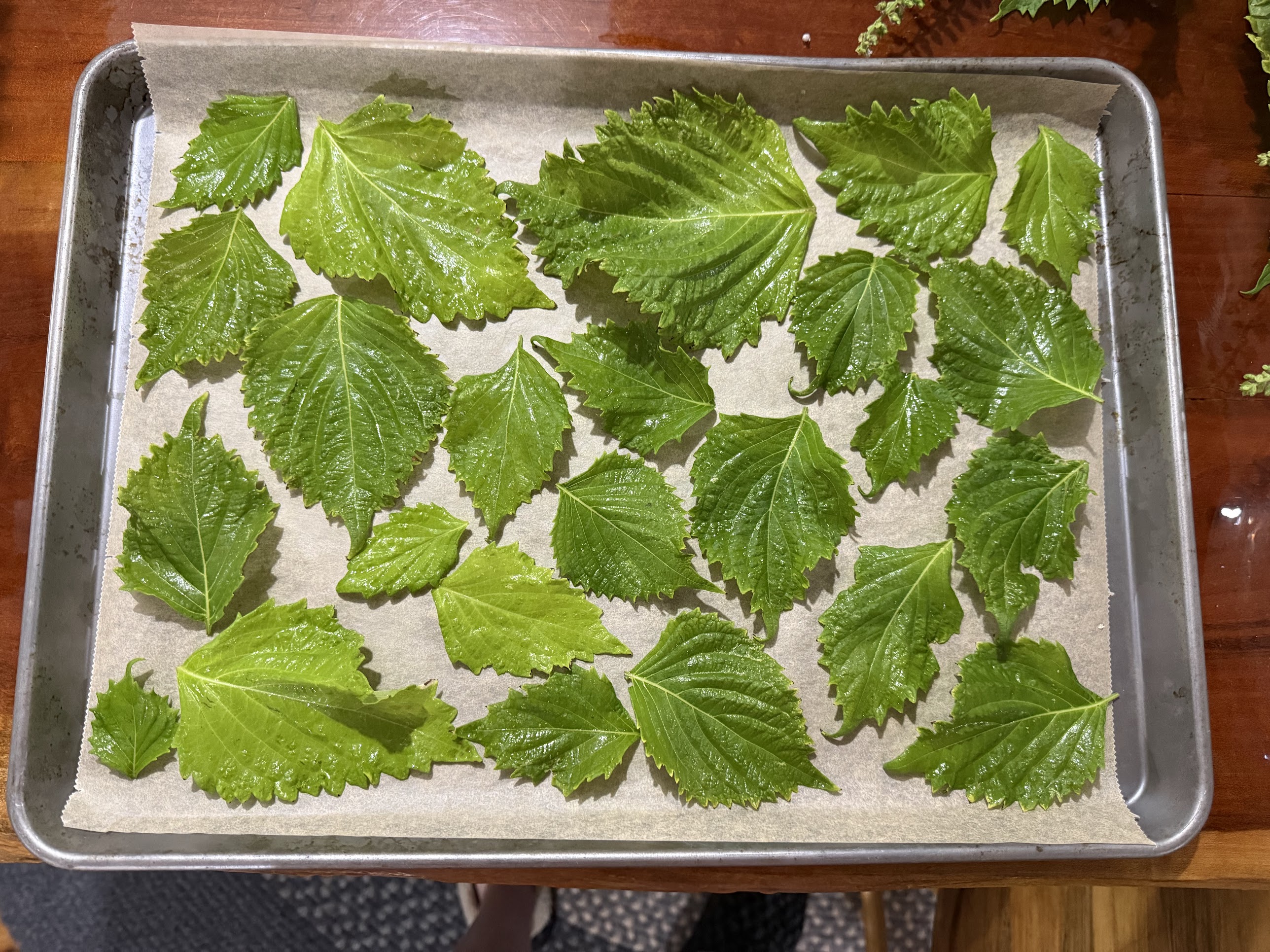
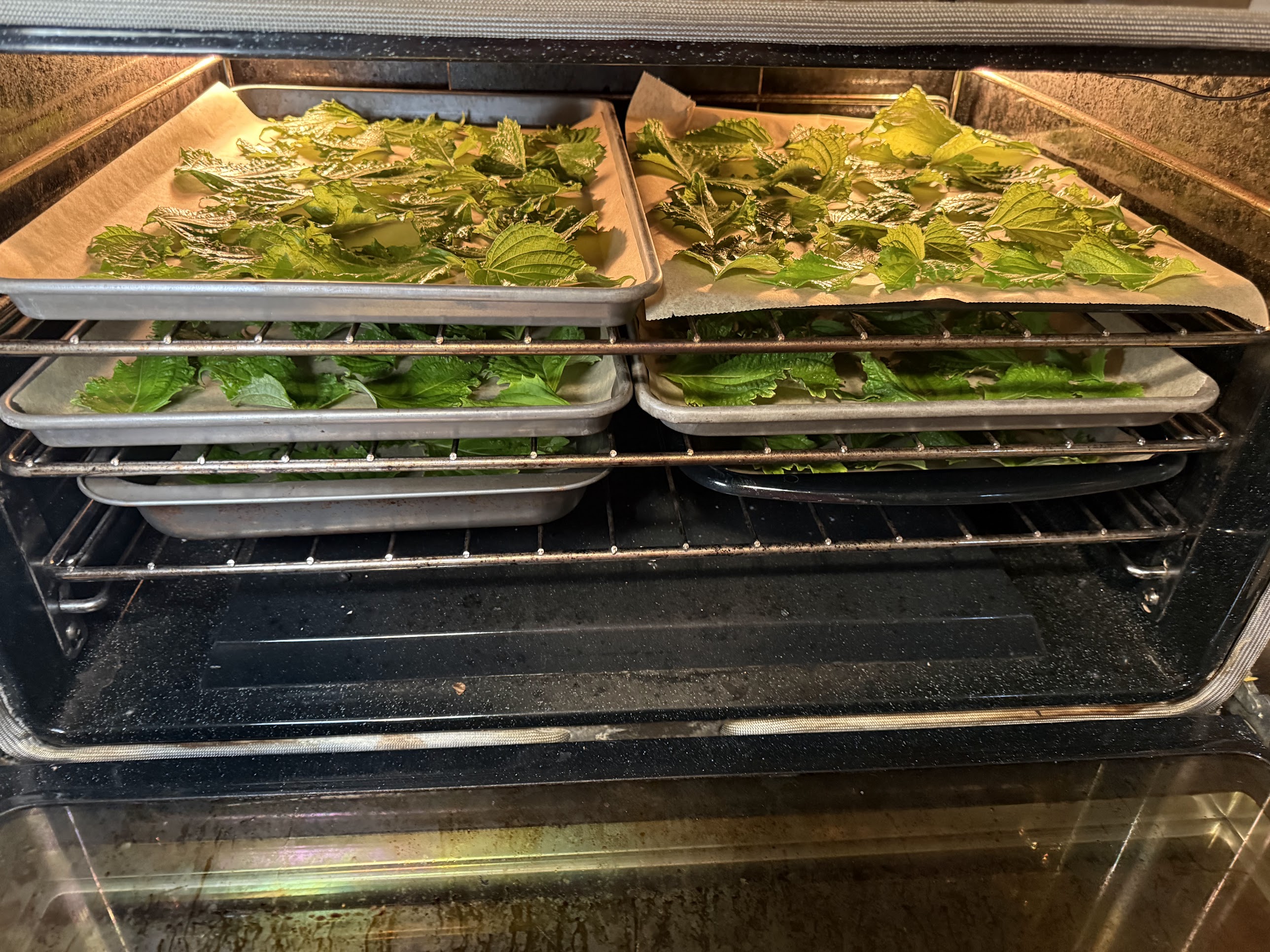
Method 2: The Oven (and a Near-Disaster)
For the remaining mountain of leaves, I broke out essentially every baking pan I own, lined them with parchment, and loaded them up. I made the mistake of looking up some AI advice for time and temperature recommendations, and Gemini confidently told me to leave them in the oven at ~150°F for "a couple of hours."
Spoiler alert: That is completely wrong.
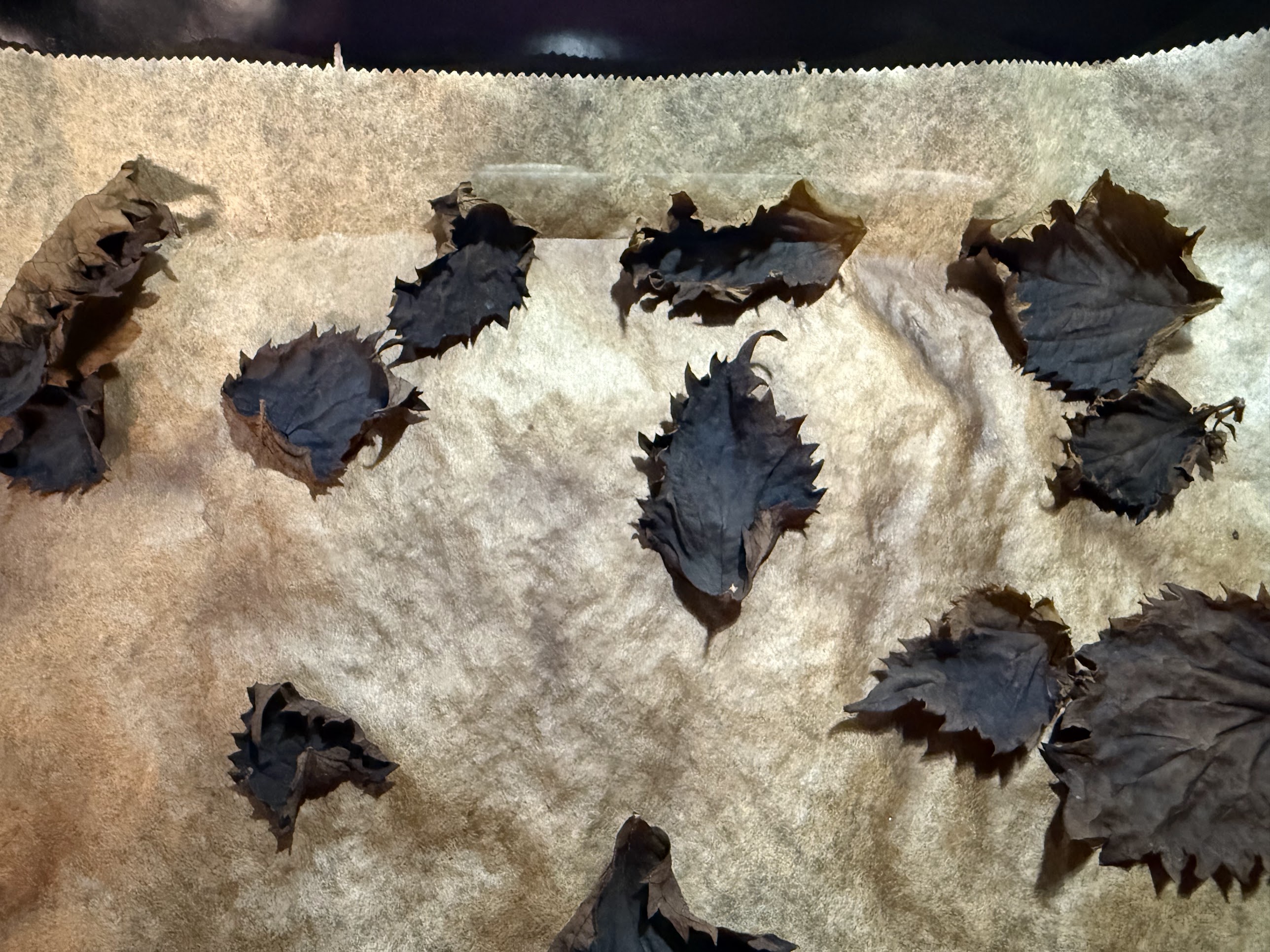
After just a little bit, I was sitting down when I smelled a distinct burning scent. I rushed into the kitchen to find the shiso on the bottom rack—closest to the heating element—burnt to a crisp! Delicate leaves do not need hours in the oven. If you’re using an oven, especially with a convection setting, you only need about 15 minutes. Watch them closely!
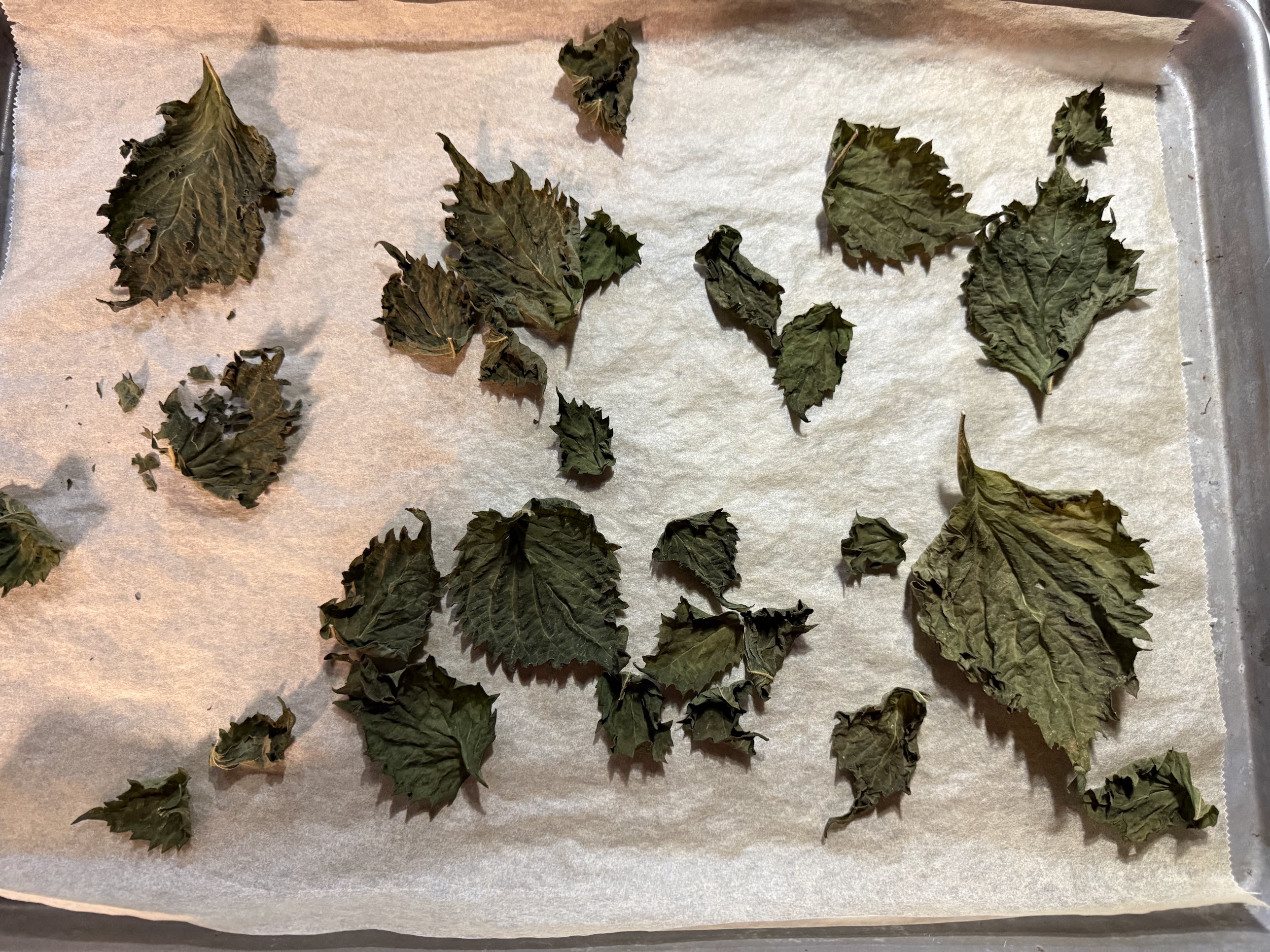
Once I adjusted the oven time, the rest of the batch came out perfectly. The leaves were paper-crisp, retained their vibrant color, and crumbled beautifully.
The ones in the dehydrator take quite a while longer, but eventually come out looking like the nice ones from the oven - with less risk of burning them!
I’m keeping most of mine to use as a flavor (and nutrient) addition to whatever I happen to cook in the moment. It is a great flavor multiplier sprinkled over eggs, rice, or raw salmon and tuna.
You can also use dried shiso to:
- Brew a soothing, antioxidant-rich herbal tea.
- Blend it with coarse sea salt for a custom finishing salt.
- Mix it into dry rubs for poultry or fish.
It's a low-effort, high-reward plant that absolutely belongs in your nutrition toolkit.